DFW Market
What Makes Homes in Dallas Increase in Value Over Time
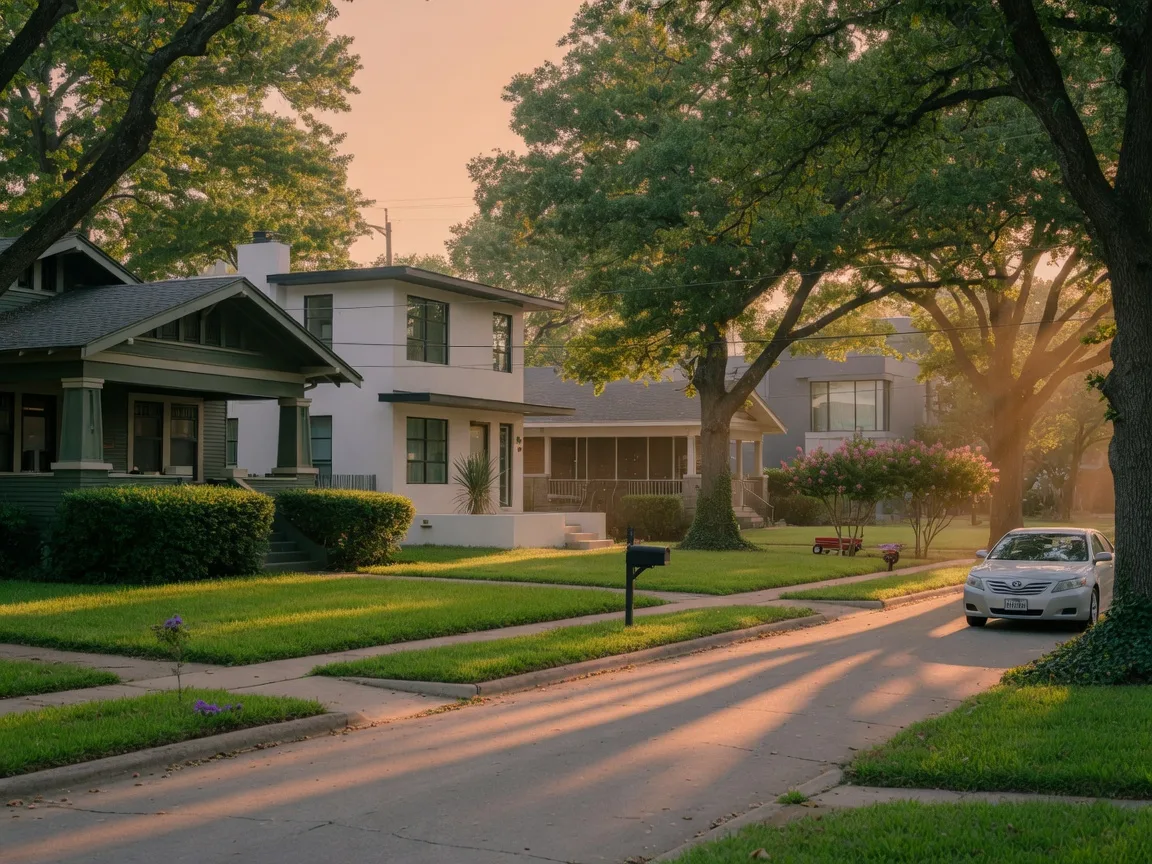
Dallas keeps finding reasons to go up in value, even when the headline market cools. The drivers are a mix of the obvious, jobs and people, and the less obvious, transit lines and neighborhoods that cannot add supply. Here is what is actually lifting Dallas home values in 2026, with the public numbers behind each one, so owners and buyers can make decisions with facts instead of guesswork.
The metro engine keeps spinning
The Dallas-Fort Worth metro added more than 120,000 residents between July 2024 and July 2025, the largest gain of any metro after Houston, per Census estimates. Dallas County itself sits at about 2.66 million people, and while the county has begun to flatten, the region around it keeps pulling new households, and those households need homes.
Jobs follow the workers
DFW added roughly 46,800 jobs in 2025 and another 54,600 through June 2026, with professional and business services responsible for more than 40 percent of the recent growth, per BLS-based reporting. Corporate relocations and expansion keep feeding the region, and every new headquarters or office campus adds demand within commuting distance of Dallas itself.
Neighborhoods, not ZIP codes, tell the story
The strongest appreciation in Dallas is happening block by block. Bishop Arts and Oak Cliff, in the 75208 area, have seen median sale prices around $485,000 in mid-2026, up about 5.4 percent year over year, driven by walkability, proximity to downtown, and a tight supply of homes in a neighborhood people want. The lesson: value growth in Dallas is increasingly neighborhood-level, and a local broker who works those streets matters more than any citywide average.
Transit adds a measurable premium
DART rail access carries a real value effect: DART's own reporting cites residential rents about 10 percent higher and commercial rents about 12.6 percent higher near its stations, and the new Silver Line, which opened in 2025, is projected to lift values around its stops. For buyers, proximity to a station can be a long-term value play, not just a convenience.
The honest 2026 math
Dallas is not repeating the double-digit years. Case-Shiller data showed Dallas among the weaker metros from December 2024 to December 2025, down about 1.5 percent, while OpenDoor put the city median near $420,000 in May 2026, up 2.4 percent year over year, and most 2026 forecasts call for modest 2 to 4 percent appreciation. That means smart buying and patient holding, not flipping on momentum.
What this means for you
For owners, the recipe is location patience: neighborhoods with real demand, transit access, and little room to expand tend to hold and grow value. For buyers, it means paying for verified neighborhood fundamentals and letting the county, the district, and comparable sales, not a citywide headline, set your number.
Sharon Yeary and the Sharcom Realty Group team work Dallas and its suburbs daily with 27 years of Texas market experience. If you are buying or selling in the city, ask us for a neighborhood-level look at what is actually appreciating and why.
Ready to talk specifics?
Get a guaranteed cash offer on your home
A Sharcom broker will size up your home against today's comparable sales and send the cash offer, with no obligation.